
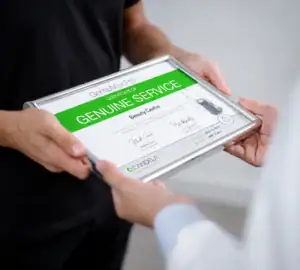
 Buying a used aesthetic laser can be a smart way to expand your treatment menu without taking on the full cost of a brand-new system. For many med spas, dermatology offices, plastic surgery clinics, and laser hair removal businesses, the right pre-owned device can open the door to more services, more patients, and stronger revenue potential.
But used laser equipment is not something to buy on price alone.
Two systems can look similar online and still be completely different once you look closer. Condition, service history, handpieces, software, output, accessories, compatibility, and post-sale support can all affect whether the laser is ready for clinical use or becomes an expensive problem after delivery.
That is why buying a used aesthetic laser in 2026 requires more than finding a good deal. It requires knowing what to check, what questions to ask, and what warning signs to avoid before you commit.
This guide will walk you through the key factors to consider before buying used cosmetic laser equipment, so you can make a more confident decision and choose a system that fits your practice, your treatments, and your long-term goals.
Why Clinics Buy Used Aesthetic Lasers
Clinics usually start looking at used aesthetic lasers for one simple reason: they want more treatment capability without tying up too much cash.
A new laser platform can be a major investment. For a startup med spa, that cost can limit how many rooms you can build out, how much you can spend on marketing, or how much working capital you keep in reserve. For an established clinic, buying new every time you expand may not make financial sense, especially if a refurbished or certified pre-owned system can perform the same core treatment functions at a lower cost.
To make the buying decision easier to compare, here is a quick side-by-side look at how new and used cosmetic lasers usually differ from a business standpoint.
| New vs. Used Cosmetic Lasers | ||
|---|---|---|
| Feature | New Laser | Used Laser |
| Purchase Price | High | Lower |
| Warranty | Full Manufacturer Warranty | Dealer or Limited Warranty |
| Technology | Latest Features | Proven Technology |
| ROI Timeline | Longer | Faster |
| Depreciation | Highest in First Few Years | Lower |
| Availability | New Models Only | Wide Selection of Models |
| Best For | Large Clinics | Startups & Growing Practices |
Use this as a quick reference, then weigh the decision against the actual system condition, treatment demand, warranty options, and support available after purchase.
ROI matters more than the sticker price
The real question is not, “How cheap is this laser?” The better question is, “How quickly can this equipment pay for itself without creating operational headaches?”
Aesthetic devices generate revenue through treatments. Hair removal, IPL photofacials, tattoo removal, skin resurfacing, RF skin tightening, vascular treatments, and pigmentation treatments all depend on consistent patient demand and reliable device performance.
The market demand is there. The American Society of Plastic Surgeons reported that interest in aesthetic health remained steady in 2024, with minimally invasive procedures increasing year over year in its procedural statistics. ASDS also reported in its 2025 Consumer Survey on Cosmetic Dermatologic Procedures that 70% of respondents were considering a cosmetic procedure.
That does not automatically mean every laser is a good investment. A device only delivers ROI when it aligns with your local demand, staff skill level, patient demographics, pricing model, and treatment menu.
A $35,000 used system that fills your schedule may be a better business decision than a $140,000 new system that is used only twice a week. On the other hand, a bargain machine with no service support, missing accessories, and recurring fault codes can quickly eat up the savings.
Lower startup costs
For a new med spa or cosmetic practice, used medical laser equipment can lower the barrier to entry. Instead of spending a large portion of the opening budget on one new device, a clinic may be able to purchase a used system and keep more cash available for buildout, staffing, compliance, training, insurance, consumables, and marketing.
That matters because the device is only part of the real startup cost. You may also need treatment room upgrades, eyewear, smoke evacuation for ablative lasers, cooling supplies, service agreements, business licensing, medical director support, EMR setup, and advertising.
Buying used aesthetic lasers can give a new practice more breathing room.
Expanding treatments without overcommitting
Established clinics often buy used cosmetic lasers to test or expand a treatment category. A dermatology office may already offer injectables and skincare but want to add laser hair removal. A med spa may want to bring tattoo removal in-house instead of referring it out. A plastic surgery office may want fractional resurfacing as part of post-procedure skin rejuvenation.
Used equipment can make that expansion less financially aggressive. Instead of committing to the newest platform at the highest price point, the clinic can start with proven technology and build patient demand first.
Financing flexibility
Used equipment may also be financeable, depending on the lender, the device’s condition, the system’s age, and the remaining useful life. The U.S. Small Business Administration explains that SBA-backed loans help small businesses access funding by reducing lenders’ risk, and that equipment purchases can be part of small-business financing strategies through SBA loan programs. You can review the SBA’s overview of small business loan programs here: SBA Loans.
For clinics, financing used cosmetic laser equipment can protect working capital. Instead of paying the full cost upfront, qualified buyers may be able to spread payments over time while the device begins generating revenue.
The key is to avoid financing a machine before you understand the real operating costs. Monthly payment, service costs, consumables, warranty coverage, handpiece life, and repair access should all be included in the calculation.
Best Types of Used Cosmetic Lasers for Sale
When clinics search for cosmetic lasers for sale, used medical lasers for sale, or used laser machines for sale, they often focus on brand first. Brand matters, but treatment category matters more.
The best used laser for your clinic depends on what you plan to treat, who your patients are, how much downtime they will accept, and how experienced your providers are.
Hair removal lasers
Laser hair removal remains one of the most common entry points for clinics buying used aesthetic lasers. It has broad patient demand, predictable package pricing, and repeat visits over a treatment series.
According to StatPearls through NCBI Bookshelf, lasers and intense pulsed light systems are among the most effective options for long-term hair reduction. The same source explains that hair removal systems commonly target melanin in the hair follicle, which is why patient selection, hair color, skin type, wavelength, fluence, pulse duration, and cooling matter.
Common hair removal technologies include:
755 nm Alexandrite lasers
These are often used for lighter skin types and can be very efficient for large treatment areas.
810 nm diode lasers
Diode systems are common in hair removal and can offer a strong balance of speed, depth, and versatility.
1064 nm Nd lasers
Nd systems penetrate deeper and are commonly used when treating darker skin types because their longer wavelengths are less strongly absorbed by epidermal melanin than shorter wavelengths.
IPL hair removal systems
IPL is not a true laser because it uses broad-spectrum light rather than a single wavelength. Still, it is widely used for hair reduction and photorejuvenation when patient selection is appropriate.
For a clinic, the buying question is not only “Does this remove hair?” It is also:
- Can it treat the skin types common in my area?
- Does it have reliable cooling?
- How fast is the spot size and repetition rate?
- Are the handpieces still supported
- What is the shot count or pulse count?
- Can the device handle daily volume?
A used hair removal laser can be a strong revenue producer, but only when the platform fits the clinic’s actual patient base.
RF skin tightening
RF skin tightening uses radiofrequency energy rather than laser light. These systems heat tissue in a controlled way to support collagen remodeling and skin tightening. RF devices can include monopolar, bipolar, multipolar, fractional RF, and RF microneedling systems.
A 2026 buyer should be careful here. RF is popular, but it is not risk-free. In 2025, the FDA issued a safety communication warning about serious complications reported with certain uses of RF microneedling devices, including burns, scarring, fat loss, disfigurement, nerve damage, and the need for medical or surgical intervention. The FDA communication is available here: Potential Risks with Certain Uses of Radiofrequency Microneedling.
That does not mean clinics should avoid RF entirely. It means clinics should treat RF skin tightening and RF microneedling devices as serious medical-grade equipment. Before buying a used RF system, check the treatment tips, consumables, software version, service access, training requirements, adverse event history, and manufacturer support.
A used RF device may be a smart buy for facial tightening, body contouring support, cellulite improvement, or texture work, depending on the platform. But the staff must be trained, protocols must be conservative, and the device must be in proper working order.
Tattoo removal machines
Tattoo removal is typically performed with Q-switched or picosecond laser systems. These devices deliver very short pulses that target tattoo pigment. Different wavelengths are used for different ink colors and depths.
The 1064 nm Nd wavelength is commonly used for black and dark ink. The 532 nm wavelength is commonly used for red and some warmer pigments. Other wavelengths, such as 755 nm and 694 nm, may be used for certain blue, green, or other resistant colors, depending on the device.
A 2024 study available through PubMed Central notes that picosecond Q-switched Nd lasers target pigment chromophores and are used in tattoo removal, including treatment of black tattoos in skin type IV patients. You can read the study here: Removal of Black Tattoos by Picosecond Q-switched Nd Laser.
Used tattoo removal machines can be expensive, but they may also create a strong specialty service line. The challenge is that these systems often have high peak power, sensitive optics, expensive handpieces, and costly service needs. Before buying one, verify energy output, spot size consistency, cooling, calibration history, lens condition, pulse counts, error logs, and whether the system supports the wavelengths you need.
IPL machines
IPL machines are popular because they can support multiple services: photofacials, redness reduction, pigmentation treatments, hair reduction, acne protocols, and skin rejuvenation, depending on the filters and platform.
A review indexed on PubMed explains that IPL devices use prescribed wavelengths, fluences, pulse durations, and pulse intervals to treat a broad range of concerns, including unwanted hair growth, vascular lesions, pigmented lesions, acne, photodamaged skin, and rejuvenation. The PubMed page is here: Intense Pulsed Light, a Review.
Used IPL machines can be excellent for clinics that want a versatile entry-level aesthetic device. But IPL is highly dependent on patient selection and operator skill. It is usually not the best choice for every skin type or every indication. Darker skin types, recently tanned skin, melasma-prone patients, and patients on photosensitizing medications require careful screening.
When buying a used IPL machine, check:
- Which filters are included
- Whether the handpiece has remaining pulse life
- Whether replacement lamps are available
- Whether the cooling system works properly
- Whether the system has been calibrated
- Whether the manufacturer still supports that model
Fractional lasers
Fractional lasers are used for resurfacing, scars, texture, fine lines, photodamage, and collagen remodeling. They work by treating a fraction of the skin at a time, creating microscopic treatment zones while leaving surrounding tissue intact.
Fractional systems may be ablative or nonablative. Ablative fractional CO2 and Er lasers remove columns of tissue and involve more downtime. Nonablative fractional lasers heat tissue beneath the surface with less visible recovery.
StatPearls explains that fractional CO2 delivery splits the laser beam into many microbeams, creating columns of ablation surrounded by undamaged skin. That approach may improve the side-effect profile compared with fully ablative treatment, especially regarding dyspigmentation risk in darker skin. You can read the reference here: Laser Carbon Dioxide Resurfacing.
Mayo Clinic also explains that laser resurfacing can be ablative or nonablative, with ablative lasers removing the outer layer of skin while heating underlying skin to stimulate collagen formation. See Mayo Clinic’s overview here: Laser Resurfacing.
Used fractional lasers can be very valuable, but they require more clinical discipline than basic hair removal systems. You need proper eyewear, plume management, treatment protocols, patient consent, post-care instructions, and provider training. For ablative lasers especially, buying a used system without service records or output verification is a bad idea.
Alexandrite vs Nd vs IPL Systems
Clinics often compare an alexandrite laser for sale, a YAG laser for sale, and an IPL machine for sale because all three may be used in hair removal and aesthetic treatments. They are not interchangeable.
Alexandrite lasers
Alexandrite lasers typically operate at 755 nm. They are well known for hair removal and pigmented lesion treatment, especially in lighter skin types. They can be fast, efficient, and effective for larger areas.
The strength of alexandrite is melanin absorption. That can make it powerful for dark hair on lighter skin. The caution is that higher melanin absorption also means greater care is needed with darker skin types, tanned patients, or patients with pigmentary risk.
For a clinic with many Fitzpatrick I to III patients seeking hair removal, a used Alexandrite laser can be an excellent workhorse. For clinics serving a broader skin type range, it may be better to look for a dual-wavelength platform that includes both Alexandrite and Nd.
Nd lasers
Nd lasers commonly operate at 1064 nm. This longer wavelength penetrates deeper and is less absorbed by epidermal melanin than shorter wavelengths. That makes it useful for darker skin types when properly used.
Nd systems are used for hair removal, vascular lesions, tattoo removal in Q-switched or picosecond formats, and other indications depending on the system design.
For clinics with diverse patient demographics, a YAG laser for sale may be attractive because of its skin type flexibility. But Nd hair removal can require skill. It may be less comfortable for some patients and must be paired with appropriate cooling and conservative settings.
IPL systems
IPL machines emit broad-spectrum light filtered into treatment ranges. IPL can treat several concerns, but it is not as wavelength-specific as a laser.
IPL is often a good fit for photofacials, pigment, redness, and mild hair reduction in properly selected patients. It may not be the best option for deep vascular lesions, darker skin types, or highly targeted tattoo removal.
The main advantage of IPL is versatility. The main limitation is that versatility can make the device seem simpler than it is. Poor patient selection or aggressive settings can still cause burns, blistering, pigmentation changes, or poor outcomes.
Quick comparison
Alexandrite is often chosen for fast hair removal on lighter skin types.
Nd is often chosen for darker skin types, deeper targets, vascular work, and certain tattoo removal platforms.
IPL is often chosen for versatility, photorejuvenation, pigment, redness, and hair reduction in appropriate candidates.
If you are buying used, do not choose based only on treatment claims. Choose based on your patient population, provider training, service availability, and the condition of the specific unit.
What to Check Before Buying a Used Aesthetic Laser
Before buying a used aesthetic laser, start with the details that affect real usability, repair risk, and long-term value. A system can look clean in photos, but the shot count, handpiece condition, service records, calibration, software status, consumables, and included accessories can tell you much more about what you are actually buying.
Use this quick checklist before you compare price alone:
| Item | Why It Matters |
|---|---|
| Shot Count | Indicates equipment usage |
| Handpiece Condition | Expensive to replace |
| Service Records | Shows maintenance history |
| Calibration | Ensures accurate energy output |
| Warranty | Reduces repair costs |
| Software Status | Prevents activation issues |
| Consumables | Confirms ongoing availability |
| Accessories | Ensures the system is complete |
This table gives you the first layer of review. After that, each item should be checked more closely with the seller so you understand the condition of the actual system, not just the model name listed online.
Shot count or pulse count
Shot count tells you how much the device or handpiece has been used. Some systems track pulses at the handpiece level. Others track total system shots. Some consumable handpieces have a limited number of pulses before replacement is required.
A low price may not be a good deal if the handpiece is nearly exhausted. Replacement handpieces can cost thousands of dollars, and some systems will not fire after the consumable limit is reached.
Ask for:
- Current shot count
- Handpiece shot count
- Total system pulse count
- Photos of the counter screen
- Remaining pulse life on each handpiece
- Whether any counters were reset during service
Consumables
Consumables vary by system. They may include tips, fibers, lamps, cartridges, cooling supplies, treatment heads, filters, membranes, tubing, smoke evacuator filters, or disposable patient-contact parts.
Before buying, ask what consumables are required and whether they are still available. Some older devices are affordable upfront because replacement consumables are difficult to find or no longer supported.
Also check whether third-party consumables are safe, compatible, or allowed. Cheap replacement parts can create output inconsistency, patient safety risks, and service problems.
Service history
Service history matters. A used laser with documented maintenance is usually safer than a mystery unit sold as-is.
Ask for:
- Preventive maintenance records
- Repair invoices
- Calibration records
- Parts replacement history
- Error logs
- Service company name
- Date of last inspection
- Reason the seller is getting rid of the machine
A system that has been sitting unused for two years may need more work than a system that has been active and properly maintained. Cooling systems, water lines, optics, batteries, capacitors, flashlamps, and internal components can degrade even when the device is not being used.
Warranty
A warranty is not just a sales perk. It tells you the seller is willing to stand behind the equipment for at least some defined period.
Clarify:
- What is covered
- What is excluded
- How long coverage lasts
- Whether parts and labor are included
- Whether travel is included
- Who performs the repair
- How fast service is available
- Whether the warranty is voided by relocation, third-party service, or non-OEM consumables
A “warranty available” statement is helpful, but the written warranty terms matter more than the phrase itself.
Recertification fees
Some manufacturers require recertification before they will service a used laser that changed ownership. Recertification may involve inspection, software updates, paid parts replacement, or transfer fees.
This is one of the easiest costs to miss. A machine may appear affordable until the buyer learns that manufacturer service requires a large recertification cost.
Before purchasing, ask:
- Does the manufacturer require recertification after resale?
- Can the unit be transferred into your clinic’s name?
- Is there a fee to reactivate service?
- Will the manufacturer provide parts?
- Are software updates available?
- Can independent service companies support the system?
Calibration and output testing
A cosmetic laser must deliver energy accurately. A screen setting does not guarantee actual output. A system can display 20 J/cm² while delivering less, more, or inconsistent energy if it has calibration issues, worn optics, lamp degradation, or internal faults.
Ask whether output has been tested with proper equipment. For serious purchases, especially tattoo removal, CO2, erbium, and high-volume hair removal platforms, output verification should be part of the buying process.
The FDA’s medical laser guidance emphasizes the importance of safety, performance, reporting, and compliance for laser products. You can review the FDA’s medical laser page here: Medical Lasers.
Software locks
Software locks are one of the biggest hidden problems in used laser equipment. Some systems require activation codes, annual subscriptions, manufacturer login access, service keys, software licenses, or region-specific permissions.
Before buying, confirm:
- The device boots fully
- All treatment modes are unlocked
- All handpieces are recognized
- No service password is blocking operation
- No subscription is expired
- No manufacturer activation is required
- No region lock affects use in your country or state
A used laser that powers on but cannot access treatment modes is not a working laser. It is an expensive problem.
Hidden Costs of Used Laser Equipment
When clinics search for used laser equipment for sale, they usually compare purchase prices. That is only the beginning.
The true cost of ownership includes service, consumables, repair availability, downtime, training, room setup, and future resale value.
Tips and treatment heads
Many RF, IPL, resurfacing, and body contouring systems use disposable or limited-use tips. These may be sold individually, in boxes, or tied to a software counter.
A device with low upfront cost but expensive tips may still be profitable, but you need to build that into treatment pricing. If the consumable cost per treatment is too high, your margins may be thinner than expected.
Handpieces
Handpieces are often the most expensive accessory on a used device. A listing may show the main console at a good price, but if the handpiece is missing, damaged, or nearly depleted, the buyer may face a major replacement cost.
For used cosmetic lasers, always verify:
- Which handpieces are included
- Serial numbers
- Condition
- Shot counts
- Whether they fire properly
- Whether cooling works at the handpiece
- Whether replacement handpieces are available
A complete system is usually worth more than a console-only listing.
Maintenance
Cosmetic laser repair and maintenance should be expected, not treated as a surprise. Lasers are high-energy medical devices with cooling systems, optics, power supplies, boards, lamps, fibers, articulated arms, touchscreens, footswitches, and sensors.
Even a good used laser may need preventive maintenance after relocation.
Budget for:
- Annual service
- Calibration
- Water changes or cooling system service
- Lamp replacement
- Optics cleaning
- Software updates
- Filters
- Safety eyewear
- Smoke evacuation filters for ablative systems
- Emergency repair calls
Manufacturer lockouts
Some manufacturers restrict parts, service access, software resets, handpiece pairing, or ownership transfer. That does not automatically make a device a bad purchase, but it does mean you need clarity before you buy.
Ask the seller directly:
- Can this unit be serviced by the manufacturer?
- Can it be serviced by independent laser repair service providers?
- Are parts available?
- Are handpieces paired to the console?
- Does the device require an active service contract?
- Does moving the device trigger an inspection requirement?
A laser that cannot be serviced reliably should be priced accordingly, and in some cases, avoided.
Downtime
Downtime is a hidden cost that does not show up on the invoice. If your laser is out of service for three weeks, you may lose treatment revenue, patient trust, staff efficiency, and marketing momentum.
This matters most for clinics that build a service line around one machine. If laser hair removal is a major revenue source, a repair delay can disrupt the whole schedule.
When evaluating a used device, ask how quickly service can happen in your area. A cheaper system with no local support may cost more than a slightly more expensive system with fast repair access.
Your Pre-Purchase Checklist for Used Aesthetic Lasers
Once you understand the main buying factors, use this checklist to review the actual system before committing to a purchase.
Used Aesthetic Laser Inspection Checklist
| Inspection Item | Check | Notes |
|---|---|---|
| Verify the serial number | ☐ | Matches seller documentation |
| Confirm the year of manufacture | ☐ | Verify age of the system |
| Check overall cosmetic condition | ☐ | Look for dents, cracks, rust, or damage |
| Power on the system | ☐ | Ensure it boots without errors |
| Test touchscreen and controls | ☐ | All buttons and menus should function properly |
| Review software version | ☐ | Confirm latest supported version if applicable |
| Check for software locks or activation requirements | ☐ | Ensure all treatment modes are accessible |
| Review total shot/pulse count | ☐ | Compare with expected usage |
| Review handpiece shot counts | ☐ | Check remaining service life |
| Inspect all handpieces | ☐ | Look for cracks, wear, or loose connections |
| Test laser firing | ☐ | Confirm consistent energy delivery |
| Verify energy calibration | ☐ | Request recent calibration report |
| Check cooling system | ☐ | Inspect coolant levels, fans, and temperature stability |
| Inspect optics and lenses | ☐ | No scratches, burns, or contamination |
| Check foot pedal operation | ☐ | Responds correctly |
| Verify all treatment modes | ☐ | Every mode functions correctly |
| Inspect cables and connectors | ☐ | No cuts, fraying, or loose connections |
| Confirm included accessories | ☐ | Goggles, keys, manuals, fibers, scanners, etc. |
| Verify consumable availability | ☐ | Tips, lamps, cartridges, filters, fibers |
| Review maintenance records | ☐ | Preventive maintenance completed |
| Review repair history | ☐ | Major repairs documented |
| Check warranty availability | ☐ | Coverage period and terms |
| Confirm OEM or third-party service support | ☐ | Service available in your area |
| Verify manufacturer recertification requirements | ☐ | Required after ownership transfer? |
| Confirm software transfer eligibility | ☐ | Ownership can be transferred |
| Request a live video demonstration | ☐ | Observe the system operating |
| Verify shipping and packaging plan | ☐ | Medical-grade packing recommended |
| Confirm return policy | ☐ | Understand return conditions |
| Review purchase agreement | ☐ | Includes all promised accessories and terms |
This checklist is especially helpful when comparing multiple used laser machines for sale. A lower price may look attractive at first, but missing accessories, high handpiece counts, software locks, poor calibration, limited service support, or unclear ownership transfer details can change the real cost of the purchase.
Where to Buy Used Medical Lasers
There are several places to buy used medical lasers. Each has pros and risks.
Brokers
Brokers connect buyers and sellers. Some are knowledgeable and helpful. Others are simply middlemen moving equipment they do not inspect deeply.
The risk with brokers is that they may not physically possess the device. If they have not tested it, verified accessories, confirmed service history, or checked ownership status, you may be relying on secondhand information.
A good broker should be transparent about where the unit is located, who owns it, what condition it is in, and what support is included.
Marketplaces
Online marketplaces can have attractive prices, but they also carry the highest risk. Listings may be incomplete, outdated, or written by sellers who do not understand the device.
Common marketplace risks include:
- Missing handpieces
- Unknown shot counts
- No service records
- No warranty
- No recertification information
- No safe shipping plan
- No proof the machine works
- No support after payment
A marketplace can be useful for research, but a clinic should be very cautious about buying medical laser equipment from an unverified seller.
Private sellers
Private sellers may include clinics closing, upgrading, relocating, or selling underused equipment. A private sale can sometimes be a good deal because the seller wants a direct transaction.
The challenge is that private sellers may not know how to package, ship, inspect, or transfer the machine properly. They may also believe the device is in good condition simply because it worked the last time they used it.
Before buying from a private seller, ask for live video, serial numbers, service records, handpiece counts, error logs, accessories, photos of the device powered on, and confirmation that there are no liens or unpaid financing claims.
Refurbished dealers
Refurbished dealers are often the safest route for clinics that want used equipment without guessing. A good refurbished dealer inspects the system, verifies condition, confirms accessories, handles logistics, and may offer warranty options.
The key is to choose a dealer that is transparent. You should know what was inspected, what was replaced, what is included, what warranty is available, and what happens if the laser has an issue after delivery.
Best Used Aesthetic Laser Brands
There is no single “best” brand for every clinic. The best used aesthetic laser brand depends on your treatment menu, patient demographics, training, budget, and service access.
Still, some brands are commonly found in the used and refurbished aesthetic laser market because their systems have been widely adopted by med spas, dermatology offices, cosmetic clinics, and medical aesthetic practices.
Cutera
Cutera is known for platforms used in hair removal, vascular treatments, skin revitalization, pigmentation, body contouring, and other aesthetic applications. Many clinics look at used Cutera systems because of their versatility and brand recognition.
When evaluating a used Cutera device, check the handpieces, software options, service history, and whether the system configuration matches the treatments you plan to offer. Do not assume every platform includes every application.
Cynosure
Cynosure systems are common in hair removal, tattoo removal, skin revitalization, body contouring, and resurfacing. Buyers often look for Cynosure devices because many models are familiar to providers and patients.
With used Cynosure equipment, pay close attention to application-specific accessories, treatment heads, pulse counts, and transfer or service requirements.
Candela
Candela is especially well known in laser hair removal and dermatology-focused platforms. Alexandrite and Nd systems from Candela are often considered workhorse devices in practices that perform high-volume hair removal.
For used Candela systems, check whether the platform is single-wavelength or dual-wavelength, whether the delivery system is in good condition, and whether the cooling system is functioning properly.
Alma
Alma offers a range of aesthetic platforms across hair removal, skin rejuvenation, RF, IPL, body contouring, and resurfacing categories. Clinics may look at used Alma equipment when they want broad treatment versatility.
When buying used Alma devices, verify applicators, consumables, software modules, service support, and the condition of any included treatment heads.
InMode
InMode is widely associated with RF-based technologies, including body contouring, skin tightening, and RF microneedling applications. Because RF devices rely heavily on treatment tips, handpieces, and software-controlled protocols, buyers should review consumable costs and support availability closely.
The FDA’s 2025 RF microneedling safety communication is a reminder that RF devices should be used by properly trained providers with clear protocols and patient screening. That FDA notice is here: RF Microneedling Safety Communication.
Lumenis
Lumenis has a long history in medical and aesthetic laser technology, including IPL, resurfacing, hair removal, and surgical laser categories. Many used Lumenis systems remain desirable because of their clinical familiarity and broad adoption.
For used Lumenis platforms, inspect handpieces, lamps, filters, optics, cooling, service records, and whether the model still has parts support.
Solta
Solta is known for several aesthetic platforms, including skin tightening, resurfacing, and body contouring categories. Used Solta equipment can be appealing for clinics that want recognizable technologies with established patient demand.
Before buying, check consumables, tip availability, software access, service transfer requirements, and whether the system is complete.
Financing Used Cosmetic Laser Equipment
Financing used cosmetic laser equipment can make sense when the device has strong revenue potential and the monthly payment fits your cash flow.
The biggest mistake is treating financing approval as proof that the purchase is wise. A lender may finance the equipment, but the clinic still has to make the machine profitable.
Before financing, build a simple revenue model.
Start with:
- Purchase price
- Down payment
- Monthly payment
- Interest rate
- Term length
- Warranty cost
- Estimated service cost
- Consumable cost per treatment
- Average treatment price
- Expected treatments per month
- Marketing cost to fill the schedule
- Staff training cost
- Expected downtime
Then calculate a realistic break-even point.
For example, if your monthly payment and operating costs total $2,500, and your average net margin per treatment is $150 after consumables and labor, you need about 17 treatments per month to cover the equipment cost. That is not difficult for some services, but it depends on local demand and your ability to book patients consistently.
Financing can be especially useful when:
- You want to preserve cash
- You are adding a proven treatment with existing demand
- You already have patients asking for the service
- The machine includes warranty or service support
- The device has a strong resale market
- The payment is low enough to handle slow months
Be careful when:
- The system is old and hard to service
- Consumables are expensive or scarce
- The warranty is weak
- The treatment demand is unproven
- The monthly payment depends on aggressive booking assumptions
- The device has software locks or recertification uncertainty
Used equipment financing should support growth, not put pressure on the clinic before the treatment line is stable.
Buy Your Used Aesthetic Laser With More Confidence
A used aesthetic laser can be a smart investment, but only when you know what you are getting before it arrives at your clinic. The Laser Agent helps med spas, dermatology offices, cosmetic practices, and laser clinics choose pre-owned aesthetic equipment with more clarity, support, and confidence.
Why clinics choose The Laser Agent:
New and Certified Pre-Owned Equipment
Shop aesthetic laser systems that give your clinic access to proven technology without the full cost of buying brand-new.
Save 50% to 80% Compared to New Equipment
Expand your treatment menu while protecting your budget, cash flow, and long-term ROI.
Experienced With Aesthetic Lasers for Over 20 Years
Work with a team that understands cosmetic laser platforms, accessories, service needs, and buyer concerns.
Technician-Reviewed Systems Before Shipping
Buy with more confidence knowing your equipment is reviewed before it leaves, so you are not relying on photos and listing details alone.
OEM Service Manuals and OEM Parts
Have peace of mind knowing repairs are handled using OEM service manuals and OEM parts when service is needed.
Financing Available for Qualified Buyers
Get the equipment your clinic needs while keeping more working capital available for staffing, marketing, training, and daily operations.
Nationwide Shipping Support
Purchase from anywhere in the country with shipping support that helps get your equipment to your clinic safely.
Compatibility and Accessory Guidance
Avoid costly mistakes with help reviewing handpieces, tips, cables, fibers, scanners, cooling attachments, and system compatibility before you buy.
Shop available used aesthetic lasers today or contact The Laser Agent to find the right system for your practice.
FAQ Section
Are used aesthetic lasers worth it?
Yes, used aesthetic lasers can be worth it when the machine is properly inspected, fairly priced, serviceable, and matched to your treatment goals. Many clinics buy used cosmetic lasers to reduce upfront costs, improve ROI, and expand services without paying new-equipment pricing.
The risk comes from buying blindly. A used laser with no service history, no warranty, missing handpieces, unknown shot count, or software lock issues can become expensive quickly. The best purchase is not always the lowest-priced unit. It is the unit with the right condition, support, accessories, and revenue potential.
How long do cosmetic lasers last?
Cosmetic lasers can last many years, but lifespan depends on the platform, usage level, maintenance, environment, service access, and whether parts remain available. A lightly used system with regular maintenance may have years of useful life left. A heavily used system with poor service history may need major repairs even if it looks clean.
When buying used medical laser equipment, focus less on age alone and more on condition. Ask about shot count, calibration, handpieces, service records, cooling system condition, error logs, and parts availability.
Can used lasers be serviced?
Yes, many used lasers can be serviced. Service may come from the manufacturer, authorized service providers, or qualified independent laser repair service companies. The important question is whether the specific model you are buying can still be supported.
Before purchase, confirm whether parts are available, whether the manufacturer will service a transferred unit, whether recertification is required, and whether independent technicians can work on the system. A used laser that cannot be serviced reliably is a risky purchase.
Is recertification required?
Sometimes. Recertification depends on the manufacturer, model, ownership transfer, service status, and whether the device has been maintained within manufacturer requirements. Some systems may require inspection, transfer fees, software updates, or paid repairs before manufacturer service is available.
Before buying, ask the seller and the manufacturer or service provider whether recertification applies. Get the answer before payment, not after delivery.
What is the best laser for tattoo removal?
The best laser for tattoo removal depends on ink color, tattoo depth, patient skin type, treatment goals, and budget. Q-switched and picosecond lasers are commonly used for tattoo removal. Nd wavelengths are often used for black and dark ink, while other wavelengths may be needed for red, green, blue, or resistant pigments.
A tattoo removal machine should be evaluated carefully before purchase because energy output, pulse duration, beam quality, spot size, optics, cooling, and calibration all affect performance. A used tattoo removal laser can be a strong investment, but it should be inspected and supported before it enters clinical use.
What should I ask before buying used laser machines for sale?
Ask these questions before buying used laser machines for sale:
- What is the serial number?
- What year was the device manufactured?
- What handpieces are included?
- What are the shot counts?
- Are service records available?
- When was it last calibrated?
- Does it have any active fault codes?
- Are all treatment modes unlocked?
- Is warranty available?
- Are parts and consumables still available?
- Is recertification required?
- Who will handle shipping?
- What happens if the device arrives damaged or does not work?
A serious seller should be able to answer these questions clearly.
Are used cosmetic lasers safe?
Used cosmetic lasers can be safe when they are properly maintained, calibrated, inspected, and operated by trained professionals. Safety depends on the device condition and the provider’s skill.
Laser safety is not optional. The American Society for Laser Medicine and Surgery has professional resources on laser safety, and its laser safety guide discusses protective eyewear, plume evacuation, and operator safety in dermatology and plastic surgery settings. You can review ASLMS professional resources here: ASLMS Standards of Practice.
Should I buy one multifunction platform or several specialized lasers?
It depends on your clinic. A multifunction platform may be better if you need versatility and have limited room or budget. Several specialized lasers may be better if you have high treatment volume, advanced providers, or a focused service line.
For example, a clinic built around laser hair removal may benefit from a dedicated high-speed hair removal platform. A general med spa may prefer IPL or a multi-application system. A dermatology office may need more specialized vascular, resurfacing, or pigment devices.
Is an IPL machine for sale a good first purchase?
An IPL machine can be a good first purchase because it may support photofacials, pigment, redness, and hair reduction in appropriate patients. It is often versatile and easier to position in a treatment menu.
But IPL is not ideal for every skin type or every condition. Patient selection is critical. Before buying a used IPL system, confirm which filters and handpieces are included, whether lamps are available, and whether the device has been calibrated.
Should I buy from a private seller or refurbished dealer?
A private seller may offer a lower price, but the buyer usually takes on more risk. A refurbished dealer may cost more upfront, but can provide inspection, logistics, warranty options, and clearer support.
For a clinic that depends on the device for revenue, support often matters more than saving a little on purchase price. If a private sale goes wrong, the repair and downtime can cost more than the original savings.
What makes The Laser Agent different?
The Laser Agent focuses on used cosmetic, medical, and aesthetic laser equipment for professional practices. The company helps clinics buy, sell, service, refurbish, finance, and ship used laser systems.
That full-picture approach matters because a good used laser purchase requires more than a listing photo and a price. Clinics need to understand condition, accessories, warranty options, service history, shipping, support, and treatment fit. The Laser Agent helps buyers look at those details before making a purchase, which is exactly what clinics need when investing in used aesthetic lasers in 2026.
