
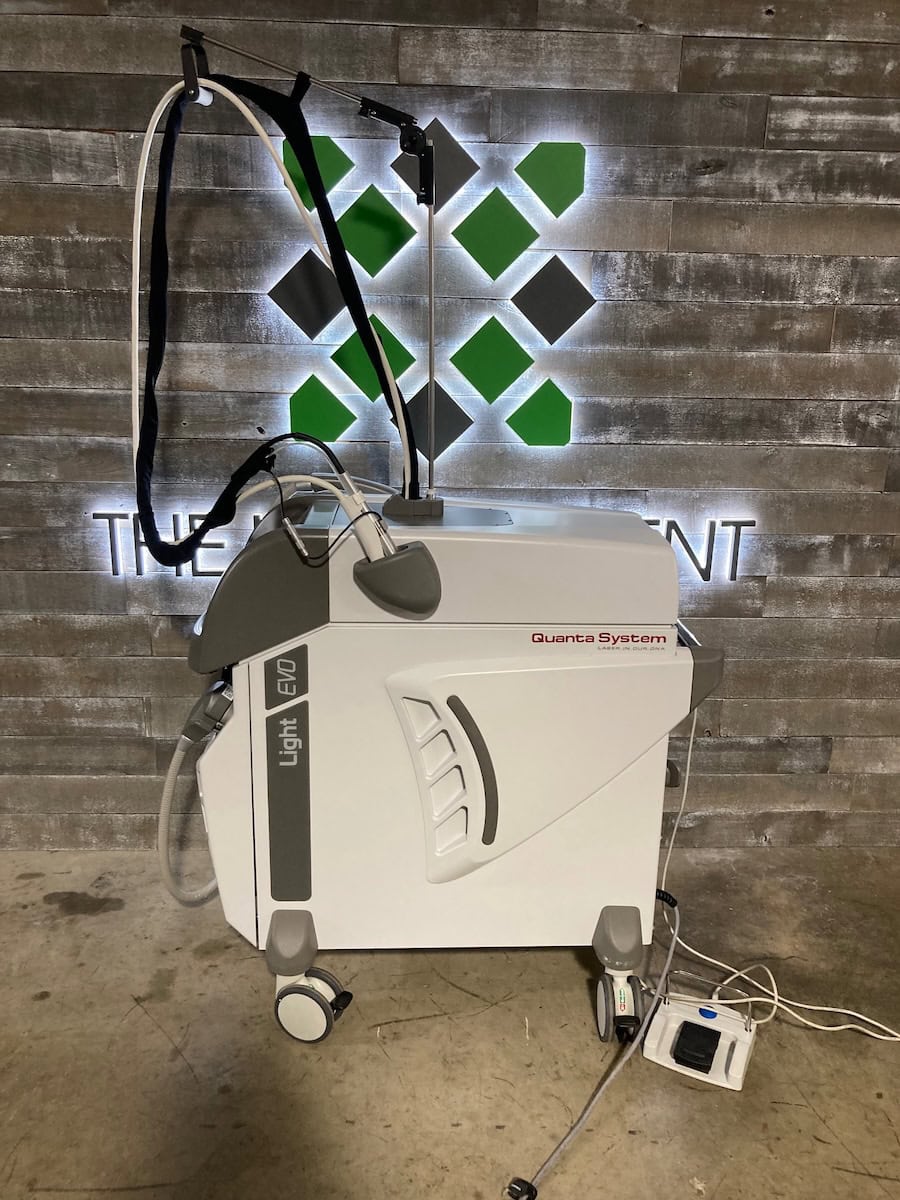
 Are you paying for the treatments your practice will actually perform, or for everything the system is capable of doing?
Aesthetic platforms can come with multiple wavelengths, handpieces, treatment modes, software options, and upgrade paths. That can make a more feature-heavy system look like the safer investment, especially when the practice expects to grow.
But every added capability affects the purchase differently, and not all of them will earn a place on the schedule. Before you buy aesthetic lasers, this guide will help you separate useful capabilities from expensive extras, compare systems around actual treatment demand, and calculate what the equipment needs to produce once it reaches your practice.
More Features Do Not Automatically Create More Revenue
A system may support six treatment applications while a practice regularly uses only two.
The other four still influence what was paid for the equipment, but they do not generate revenue simply because they are available.
This is especially important with configurable platforms. Depending on the model, additional capabilities may require:
- Separate handpieces
- Additional applicators
- Software licenses
- Treatment-specific consumables
- Training
- Maintenance
- Accessories
- Additional marketing
The useful question is not how many treatments appear on the equipment brochure. It is how many of those treatments have enough demand to make it onto the schedule.
Start With the Treatments Already Creating Demand
Before comparing equipment specifications, look at what patients are already requesting.
Consultation notes, calls, online inquiries, waitlists, and referrals can reveal where the practice is missing revenue.
Look for patterns such as:
- Patients being referred elsewhere for laser hair removal
- Existing skincare patients asking about pigmentation
- Tattoo-removal inquiries the practice cannot currently accept
- Demand for resurfacing or acne-scar treatments
- A current service with appointment wait times
- Providers sharing one system and competing for access
These patterns give the equipment purchase a specific job.
For example, a practice primarily trying to increase hair-removal capacity may have little reason to pay substantially more for a platform because it also supports treatment categories the practice has no plans to introduce.
Separate Must-Have Features From Nice-to-Have Features
Once the treatment goal is clear, build the equipment requirements around it.
Divide potential features into three groups.
Must-Have
These are capabilities required to perform the intended treatments and support the expected patient volume.
They may include:
- Required wavelength
- Correct handpiece
- Appropriate spot sizes
- Sufficient treatment speed
- Required cooling
- Compatible treatment modes
- Necessary safety features
Without these, the system cannot properly fill the role it was purchased for.
Useful for Planned Growth
These features are not essential immediately, but there is a realistic reason the practice may use them.
For example, an additional applicator may make sense when providers already receive regular inquiries for that service and plan to launch it within the next year.
There should be a business reason behind the feature, not simply a possibility that it might be useful someday.
Unnecessary for the Current Plan
These are capabilities with no clear demand, launch timeline, trained provider, or room capacity behind them.
They may be impressive features. That does not make them valuable to this particular practice.
Sorting features this way makes it easier to compare equipment based on how it will actually be used.
Do Not Confuse a Multi-Application Platform With a Complete System
A common mistake is seeing that a model can perform several treatments and assuming the used unit being considered can perform all of them.
The platform and the configuration are not necessarily the same thing.
A console may be compatible with several handpieces while the unit for sale includes only one or two. Another system of the same model may have a much more complete package.
Before buying, request the exact configuration and confirm:
- Included handpieces
- Included applicators
- Wavelengths
- Spot sizes
- Filters or lightguides
- Scanners
- Software
- Treatment modes
- Cooling equipment
- Accessories
Then compare that list with the treatments the practice plans to offer.
This prevents paying a premium for the theoretical capabilities of the platform when the required components are not actually included.
Do Not Pay for Maximum Capacity When Moderate Capacity Will Do
Equipment specifications often make bigger numbers look automatically better.
Larger spot sizes, faster repetition rates, more power, and additional treatment modes can be valuable when the schedule requires them. Their value changes when appointment volume is modest.
Consider treatment speed.
A high-volume hair-removal practice performing large treatment areas throughout the day may benefit substantially from a faster system with a large spot size.
A practice performing only a handful of smaller hair-removal appointments each week may not see the same financial benefit from paying more for maximum throughput.
Compare capacity with expected use:
Expected Weekly Treatments × Average Treatment Time = Weekly Equipment Hours
Then consider how close that workload comes to the practical capacity of the system.
If the equipment will operate only a few hours each week, paying heavily for maximum throughput may not improve the economics of the purchase.
Be Careful With Features That Require Additional Purchases
Some features are valuable only after something else is purchased.
A treatment mode may require a separate handpiece. An applicator may need proprietary consumables. A software upgrade may require additional hardware.
Before assigning value to an optional feature, calculate what it takes to use it.
Ask:
- Is the required handpiece included?
- Does the feature require activation?
- Are additional consumables needed?
- Is provider training required?
- Does it need another cooling system?
- Will the room require modifications?
- Are accessories still readily available?
- What will maintenance add annually?
A feature worth $0 in current revenue should not automatically be treated as added value simply because it appears on the specification sheet.
Compare Cost Per Useful Capability
Two systems can have very different prices and still deliver similar value for the treatments a practice actually intends to perform.
Suppose:
System A: $45,000
Supports the two treatment categories the practice plans to launch.
System B: $70,000
Supports those same two categories plus four additional applications.
The additional $25,000 only creates value if the practice can turn those extra applications into appointments.
If the additional services require new training, marketing, consumables, and provider time but have little demonstrated demand, System B may simply commit more capital to unused capacity.
The comparison changes if several of those additional treatments are already being requested.
This is why feature count alone is a poor measure of equipment value.
Check Whether Features Can Be Added Later
Not every capability needs to be purchased upfront.
Some platforms allow compatible handpieces, applicators, or modules to be added later. When those upgrade paths remain available, the practice may be able to start with a smaller configuration and expand after demand develops.
Before relying on this strategy, verify:
- Which components can be added
- Whether they remain available
- Approximate acquisition cost
- Software requirements
- Compatibility with the specific generation
- Whether installation or activation is required
- Availability of training and service
An expandable system can provide flexibility without requiring the practice to fund every possible treatment from the beginning.
However, the upgrade path needs to be real. Do not assume an accessory can be added later simply because another version of the platform supports it.
Calculate the Cost of Features That Require Consumables
The purchase price is not the only place unnecessary features can become expensive.
Some applications require disposable cartridges, tips, treatment cards, filters, or other consumables. A service that appears profitable based on treatment price can look different once its direct costs are included.
For each planned application, estimate:
Treatment Price − Direct Treatment Costs = Contribution Per Treatment
Direct costs may include:
- Disposable components
- Consumables
- Provider labor
- Cooling supplies
- Treatment-specific accessories
- Financing allocation
- Maintenance allowance
This gives a better picture of how many appointments the feature needs to justify its place in the equipment package.
Do Not Buy a Treatment Category Without a Provider Plan
Equipment cannot generate revenue without someone qualified and available to perform the treatments.
Before paying for another application, determine:
- Who will perform it?
- Does that provider require additional training?
- How many hours are available each week?
- Which treatment room will be used?
- Will the new service compete with more profitable appointments?
- How long does each treatment take?
- Can the provider realistically support repeat-treatment packages?
This is particularly important for practices adding several applications at once.
A system may be capable of offering a large treatment menu while the team only has enough time to launch and promote one new service properly.
Factor Room Space Into the Investment
A feature can also create operational costs.
Additional handpieces need storage. Some treatments require separate cooling. Others may need supplies, carts, protective equipment, or longer setup and cleanup.
A multi-application system can save room compared with several separate consoles, but the full workflow still needs to fit.
Before purchasing, map out:
- Equipment footprint
- Treatment bed
- Provider movement
- Handpiece storage
- Cooling equipment
- Supply storage
- Electrical access
- Patient entry and exit
- Cleaning and turnover
A treatment capability has limited value when the room cannot support it efficiently.
Compare the Treatment-Ready Price Instead of the Equipment Price
The lowest-priced listing is not necessarily the least expensive system to start using.
Calculate:
Treatment-Ready Cost = Purchase Price + Missing Components + Shipping + Installation + Training + Room Preparation + Immediate Service
A lower-priced system may require:
- Another handpiece
- New consumables
- Electrical work
- Calibration
- Cooling equipment
- Repairs
- Software
- Training
A more complete system may cost more upfront but require less additional spending before the first patient can be treated.
This comparison is particularly important when evaluating used equipment from different sellers.
Used Equipment Can Change Which Features Fit the Budget
Buying used can make higher-specification equipment available at a lower acquisition cost than purchasing the same model new.
That does not mean the system with the most features becomes the automatic choice.
It means the practice may have more room to compare configurations.
A Certified Used system with the exact handpieces and treatment capabilities required may provide better value than paying new-equipment pricing for a larger package filled with features that will rarely be used.
The same rules still apply to used equipment. Condition, configuration, serviceability, included components, and ongoing costs matter just as much as the initial price.
Give Every Major Feature a Job Before Paying for It
A simple feature audit can keep the comparison focused.
For every major capability included in the system, answer four questions:
| Question | What It Reveals |
|---|---|
| What treatment will this feature support? | Whether it has a defined role |
| How much patient demand already exists? | Whether appointments are likely |
| Who will perform the treatment? | Whether provider capacity exists |
| When will the feature begin generating revenue? | Whether paying for it now is justified |
If several expensive features cannot make it through those questions, the practice may be looking at more equipment than it currently needs.
Know Where Spending More Can Be Worth It
Avoiding overinvestment does not mean choosing the cheapest laser.
Some features can justify a higher price when they solve a measurable problem.
Spending more may make sense when a feature:
- Significantly reduces treatment time on a high-volume service
- Supports a treatment already being referred elsewhere
- Allows another provider to generate appointments
- Replaces several frequently used systems
- Improves capacity in an overbooked treatment category
- Provides a realistic expansion path
- Includes expensive handpieces the practice would otherwise need to purchase separately
The difference is utilization.
A more expensive feature can be worthwhile when there is a clear path from capability to appointments.
Buy for the Treatments That Will Reach the Schedule
The strongest equipment package is not necessarily the one with the longest feature list.
A system earns its place through the treatments providers can actually perform, patients are willing to book, and the practice has enough capacity to deliver consistently.
That is why equipment comparisons should begin with treatment demand and work backward to the technology required to serve it.
Buy Aesthetic Lasers Around Your Treatment Plan, Not a Feature List
It is easy to spend more when every additional wavelength, handpiece, or application sounds like another opportunity. The better comparison is how much of that capability will actually reach your treatment rooms.
The Laser Agent carries Certified Used aesthetic equipment across a range of treatment categories and configurations. Because we own the equipment we sell, our team can help you compare the actual handpieces and capabilities included with available systems rather than choosing from a specification sheet alone.
Reach out to us with the treatments you offer now, the services patients are requesting, and your equipment budget. We can help you compare systems without paying for a long list of capabilities your practice has no immediate plan to use.
