
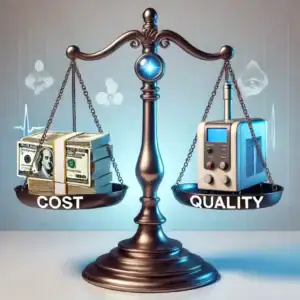
 Can a lower-priced medical laser still deliver the treatment capability your practice needs?
In many cases, yes. Previous ownership does not automatically make a laser a poor investment. The real difference comes down to the condition of the individual system, its configuration, how it was serviced, what comes with it, and who stands behind the equipment after delivery.
That distinction matters because the FDA considers proper servicing critical to the continued safe and effective use of reusable medical devices. It also separates servicing that returns equipment to its original performance and safety specifications from remanufacturing that significantly changes those specifications or the device’s intended use.
This guide breaks down where the savings come from, what quality actually depends on, how to compare the full cost of ownership, and when a Certified Used medical laser laser for sale may make more financial sense than buying new.
Lower Price Does Not Automatically Mean Lower Quality
A new medical laser comes with the latest platform generation, unused components, and manufacturer-direct benefits tied to the purchase. Those advantages can make new equipment the right choice for some practices.
A Certified Used medical laser offers a different value. It gives a practice access to established treatment technology without paying the premium attached to a brand-new system.
The wavelength, laser source, and treatment design do not disappear because the equipment has had a previous owner. A properly functioning 755 nm Alexandrite laser still uses 755 nm technology. A Certified Pre-Owned Nd system still operates around the wavelength it was designed to deliver. The same principle applies to diode, CO2, IPL, RF, and other established platforms.
What matters is how well the actual unit still performs and whether its configuration supports the treatments the practice plans to offer.
That is why “used versus new” is not the most useful comparison on its own. The stronger comparison is:
- New equipment with the latest features and a higher acquisition cost
- Certified equipment with proven technology, a lower acquisition cost, and a clearly documented preparation process
The better investment is the one that supports the required treatments, fits the practice budget, and can stay productive once appointments begin.
Where the Savings on Used Medical Lasers Come From
Certified Used equipment usually costs less because it has already entered the secondary market, and part of its depreciation is reflected in the selling price.
That lower price does not have to mean the system was stripped of its treatment capability. It means the practice is no longer paying the original new-equipment premium.
This can improve the financial side of the purchase in several ways.
Lower Initial Investment
Putting less capital into the machine leaves more money available for the parts of the business that help turn equipment into revenue, including:
- Clinical training
- Marketing
- Payroll
- Treatment supplies
- Room preparation
- Patient acquisition
- Additional equipment
Smaller Payback Target
A laser begins producing a return only after it generates enough contribution margin to cover its total cost.
A simple way to compare options is:
Payback Appointments = Total Equipment Investment ÷ Average Contribution per Treatment
Consider a hypothetical comparison:
- New system cost: $140,000
- Certified Used system cost: $80,000
- Average contribution after direct treatment costs: $400 per appointment
The new system would need approximately 350 appointments to recover the equipment cost. The Certified Used system would need approximately 200 appointments.
That does not guarantee either system will be profitable. Pricing, demand, consumables, provider time, financing, maintenance, and downtime all affect the real result. It does show how a lower acquisition cost can reduce the amount of treatment revenue required before the system pays for itself.
Less Exposure to Early Depreciation
A new platform may lose market value as it ages and newer generations are released.
A Certified Refurbished system enters the practice after some of that market adjustment has already occurred. That can make an established model attractive when its technology still fits the treatment menu and patient base.
What Determines the Quality of a Used Medical Laser?
The word “used” only describes previous ownership. It does not tell the full story of the equipment.
Two systems with the same brand, model, and year can still represent very different investments. Quality depends on the actual machine and the process behind it.
The Condition of the Individual Unit
Cosmetic appearance provides only a limited view.
Energy output, calibration, cooling, handpiece performance, scanner movement, fiber integrity, applicator response, controls, and internal components can all affect daily use.
A clean exterior does not confirm that the laser is ready for a full treatment schedule.
The Configuration
The base system is often only part of the purchase.
Handpieces, filters, scanners, fibers, applicators, foot pedals, spot-size components, tips, and software options may determine which treatments the machine can perform.
A low-priced base without the required treatment components may cost more to complete than a higher-priced system sold with the right configuration.
Service and Maintenance History
Available maintenance records can show what work has already been completed and which components may require attention next.
An incomplete history does not automatically make the equipment unusable, but it increases the importance of a thorough current inspection.
The FDA notes that poor-quality servicing can contribute to poor performance, malfunction, and adverse events, while proper maintenance and repair are important to the continued reliability of medical devices.
Parts and Consumable Availability
Some systems rely on disposable tips, treatment cards, lamps, inserts, filters, or proprietary consumables.
Replacement parts and qualified service may also become harder to source as a model ages.
A system can perform well and still be a poor fit when the supplies required to operate it are too expensive, difficult to find, or no longer supported.
The Seller Behind the Equipment
The same laser can carry a very different level of risk depending on who is selling it.
A private listing may offer limited information and little support after payment. A broker may rely on another owner for condition details. A Certified equipment dealer can inspect, test, service, and prepare the actual system in its possession before it is offered for sale.
That difference can affect the accuracy of the listing, the condition of the equipment, and the support available after delivery.
Used vs. New Medical Lasers
Choosing between Certified Used and new equipment involves more than comparing two purchase prices. The table below shows how the options differ across cost, technology, warranty, maintenance, and potential payback.
| What Matters to the Practice? | Certified Used Medical Laser | New Medical Laser |
|---|---|---|
| Upfront Cost | Lower acquisition cost | Higher acquisition cost |
| Technology | Established technology from that model generation | Current-generation technology |
| Treatment Capability | Depends on condition, software, wavelengths, and components included | Depends on the model and package purchased |
| Depreciation | Part of the early depreciation is already reflected in the price | Depreciation begins after purchase |
| Working Capital | Keeps more cash available for other business needs | Requires more capital upfront |
| Warranty | Depends on the dealer and specific system | Usually provided directly by the manufacturer |
| Maintenance | May require more attention based on age and usage | Begins with newer components |
| Parts Support | Must be confirmed for the specific model | Typically strongest on current platforms |
| Training | May come from the dealer or a third-party trainer | Often included or offered by the manufacturer |
| Latest Features | Limited to that system generation | Includes current hardware and software |
| Adding Capacity | Lower-cost option for another room or location | Larger investment when purchasing several units |
| Potential Payback | Lower cost may shorten the path to recovering the investment | Higher cost may require more treatment revenue |
Buying new can make more sense when the newest technology, manufacturer-direct training, current software, or official provider programs are central to the purchase.
Certified Pre-Owned equipment can make more sense when an established platform already delivers the treatment capability required and preserving capital matters more than owning the latest generation.
Compare the Total Cost, Not the Listing Price
The least expensive listing is not always the least expensive system to own.
A meaningful comparison should include the full amount required to place the equipment into service.
Total First-Year Cost May Include:
- Purchase price
- Financing costs
- Shipping and crating
- Installation
- Electrical or room modifications
- Immediate service
- Missing handpieces or accessories
- Clinical training
- Warranty coverage
- Consumables
- Preventive maintenance
- Replacement parts
- Expected downtime
A $50,000 laser that requires $20,000 in missing handpieces and immediate service may offer less value than a $65,000 Certified system that already includes the required configuration.
The same applies to operating costs. A platform with expensive consumables, limited service options, or frequent downtime may cost more over time than a higher-priced system with better support.
The number that matters is the treatment-ready cost, not the number shown at the top of the listing.
When Are Used Medical Lasers Worth the Investment?
A Certified Used laser can be a strong investment when several factors line up.
The Technology Already Fits the Treatment Menu
An established platform may provide everything required for hair removal, vascular treatments, resurfacing, tattoo removal, pigmentation, or another service category.
Paying more for a newer generation may add little value when the additional features are not central to the practice.
Patient Demand Already Exists
Existing demand lowers the risk of bringing the equipment into the practice.
A dermatology office already receiving vascular inquiries, a med spa turning away hair-removal appointments, or a laser clinic dealing with capacity limits may have a clearer path to using the system consistently.
The Practice Needs More Capacity
Certified equipment can make it more affordable to add a second treatment room, replace a backup system, or expand into another location.
Buying every additional machine new can place unnecessary pressure on cash flow.
The Team Already Knows the Platform
Replacing an older unit with a familiar model may reduce the learning curve and make it easier to keep existing workflows in place.
Training and clinical competency still matter, but staying with familiar technology can simplify the transition.
Parts and Service Are Still Available
A lower purchase price has little value when no one can service the system or replacement components are impossible to source.
Before purchasing an older platform, confirm that qualified technical support, common parts, handpieces, and consumables remain accessible.
The System Comes From a Reliable Source
Certified does not have much meaning without a real process behind it.
The equipment should be inspected, tested, prepared, and represented accurately by a company that can answer questions about the individual unit and provide support after delivery.
When Buying New May Be the Better Decision
Used equipment is not automatically the best financial choice.
Buying new may make more sense when:
- The treatment depends on technology available only in the latest generation
- Manufacturer-direct warranty and training are essential
- Official provider-network access is required
- An older platform has limited parts or service support
- Software licenses cannot be transferred
- The practice needs the longest possible equipment life
- Downtime would cost more than the savings from buying used
- The new system offers a meaningful improvement in speed, consumable cost, or treatment capacity
The decision should be based on the value the newer features add to the practice, not simply the appeal of owning new equipment.
What Should Be Confirmed Before Buying a Used Medical Laser?
A strong buying decision starts with the actual system rather than the model name.
Treatment Fit
Confirm that the wavelengths, handpieces, and software support the treatments the practice plans to sell.
Included Components
Review the handpieces, fibers, scanners, filters, tips, cooling equipment, foot pedals, eyewear, cords, and accessories included with the purchase.
Performance
Ask what was tested and how the system performed during inspection.
Relevant checks may include energy output, calibration, cooling, scanner accuracy, handpiece response, RF delivery, or other platform-specific functions.
Usage
Pulse counts, shot counts, lamp use, or handpiece counts can add context to the equipment’s history when those records are available.
Serviceability
Confirm that qualified technicians, replacement parts, and common consumables remain available.
Warranty and Support
Review the warranty terms and the support available after the system arrives.
Total Landed Cost
Include the purchase, shipping, setup, training, accessories, immediate service, financing, and first-year operating costs.
How Certified Equipment Changes the Equation
A Certified Used laser should offer more than a lower price.
At The Laser Agent, the published buying process includes dealer-owned inventory, a comprehensive 50-point inspection, in-house technicians, OEM service standards, warranty options, financing through Partners Capital, nationwide shipping, video demonstrations when available, and post-purchase service support. The company also states that it has more than 20 years in the equipment business and has worked with more than 20,000 practices.
Those differences matter because they address the biggest risks behind a used-equipment purchase.
Dealer-Owned Inventory
The system is already in the dealer’s possession rather than being represented through a third-party listing.
That makes it easier to confirm the actual configuration, condition, and components included with the purchase.
50-Point Inspection
A structured inspection provides a deeper look at the individual unit before it reaches the buyer.
The process may cover controls, energy delivery, cooling, handpieces, accessories, and overall system operation, depending on the technology.
In-House Service
Keeping inspection and service under one roof creates a more direct line of accountability behind the equipment.
The team answering questions is also connected to the work completed on the system.
Warranty and Post-Sale Support
Support after delivery can keep a manageable equipment issue from becoming prolonged downtime.
Warranty terms vary by system, so the exact coverage should be reviewed before purchase.
Financing and Nationwide Delivery
Financing can spread out the acquisition cost, while professional packing and nationwide shipping make equipment available beyond the buyer’s local market.
These services do not change the quality of the laser itself, but they can make the full purchase easier to manage.
So, Are Used Medical Lasers Worth the Investment?
Used medical lasers can be worth the investment when the savings come from previous ownership rather than skipped inspection, missing components, or absent support.
The strongest purchases usually share the same characteristics:
- The platform supports treatments with real demand
- The configuration is complete
- The system has been inspected and tested
- Service and parts remain available
- The warranty and support are clear
- The total treatment-ready cost fits the budget
- The lower acquisition price creates a realistic path to payback
The wrong used laser is not a bargain. A machine that arrives incomplete, unsupported, or unreliable can erase the savings through repairs, downtime, and canceled appointments.
The right Certified Refurbished medical laser can do the opposite. It can bring proven treatment technology into the practice at a lower cost, protect working capital, and reduce the amount of revenue required to recover the equipment investment.
Find a Certified Medical Laser That Makes Financial Sense
The investment should not be judged by price alone.
A strong purchase combines the right treatment capability, a complete configuration, verified condition, available service, and a cost the practice can realistically recover through treatment revenue.
At The Laser Agent, Certified Used medical lasers are backed by an inspection process, dealer-owned inventory, experienced technicians, warranty options, financing, nationwide shipping, and support after delivery.
Reach out to us to compare available systems and find the medical laser that fits your treatment menu, budget, and plans for growth.
CTA Buttons:
Browse Certified Medical Lasers
Ask About Financing
Frequently Asked Questions About Used Medical Lasers
Are used medical lasers safe?
Previous ownership alone does not determine safety.
Safety depends on the condition of the individual system, proper servicing, correct operation, provider training, maintenance, and compliance with the device labeling. The FDA states that proper servicing is critical to the continued safe and effective use of reusable medical devices.
What is the difference between used, refurbished, and Certified Pre-Owned?
Used means the equipment has had a previous owner.
Refurbished generally means the system has received some level of cleaning, repair, service, or preparation.
Certified Pre-Owned is a seller-defined standard. At The Laser Agent, it refers to equipment that goes through the company’s inspection, testing, and preparation process before sale.
Can a used medical laser perform the same treatments as a new one?
A properly functioning used system with the same wavelengths, modules, handpieces, software, and accessories can support the core applications designed for that model generation.
It should not be treated as identical to a newer platform with technologies or features introduced later.
How much cheaper is a used medical laser?
The difference depends on the brand, model, year, configuration, condition, usage, demand, and included components.
Compare the full treatment-ready cost rather than relying on a general percentage or the base-unit price alone.
How old is too old for a medical laser?
Age alone does not answer the question.
A newer system with poor maintenance may be a weaker investment than an older system with consistent service and available parts. Serviceability, output, configuration, condition, parts support, and expected workload provide a better picture than the year alone.
What should come with a used medical laser?
The package may include:
- System base
- Treatment handpieces
- Fibers or scanners
- Filters or spot-size components
- Cooling equipment
- Foot pedal
- Power cord
- Protective eyewear
- Accessories
- Owner’s manual
- Packing or crating
The complete configuration should be confirmed before purchase.
Do used medical lasers come with a warranty?
Warranty coverage depends on the seller and the specific system.
The Laser Agent offers warranty options on Certified equipment, with terms varying by system.
Can used medical lasers be financed?
Yes. Qualified buyers can apply for financing through Partners Capital when purchasing eligible equipment from The Laser Agent.
Does The Laser Agent ship medical lasers nationwide?
Yes. The Laser Agent states that it provides nationwide shipping support for Certified medical, cosmetic, and aesthetic equipment.
Can an old laser be traded in toward another system?
Trade-in options may be available depending on the model, condition, current demand, and the system being purchased.
Selling or trading unused equipment can also recover capital that would otherwise remain tied up in a machine no longer generating appointments.
